Insights from Hive Tax Book
Self-Employed Financial Intelligence
Practical tax knowledge, mortgage readiness, business operations, and financial planning for self-employed professionals.
Featured Insights
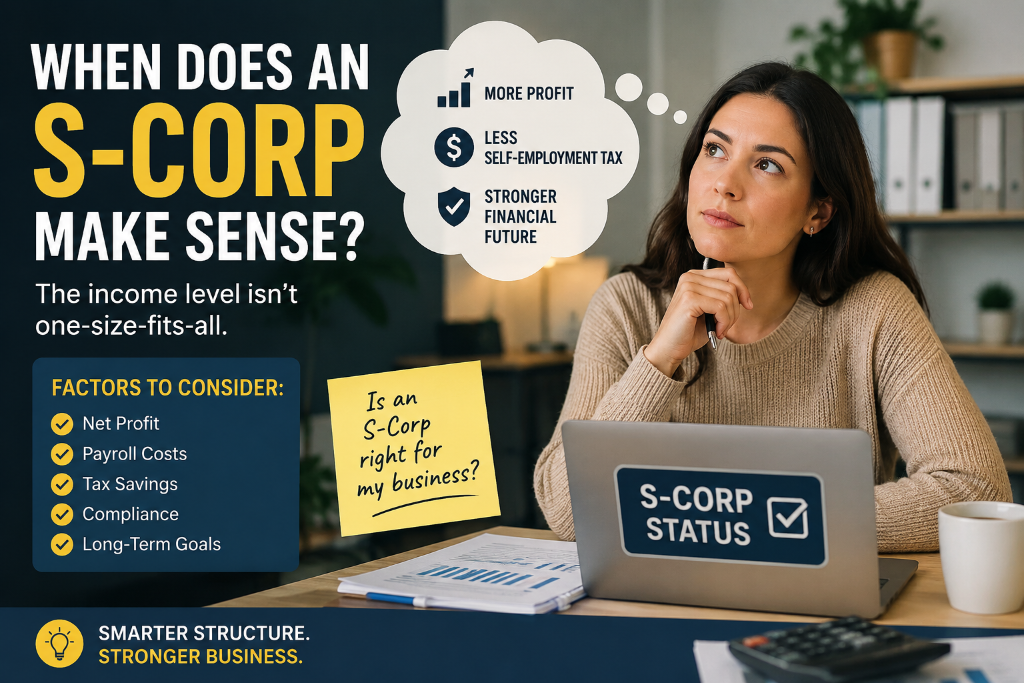
At What Income Level Does It Make Financial Sense for a Freelancer to Switch to an S-Corp?
Many freelancers wonder when an S-Corp actually starts saving money. The answer isn't based on revenue alone. Learn the income ranges, tax implications, payroll requirements, and strategic considerations that determine whether an S-Corp election makes financial sense.

Why Every LLC Needs a Registered Agent (Especially If You Travel or Work Remotely)
A registered agent serves as your business's official point of contact for state correspondence. For entrepreneurs who travel, work remotely, or relocate overseas, a registered agent can be crucial for maintaining compliance.
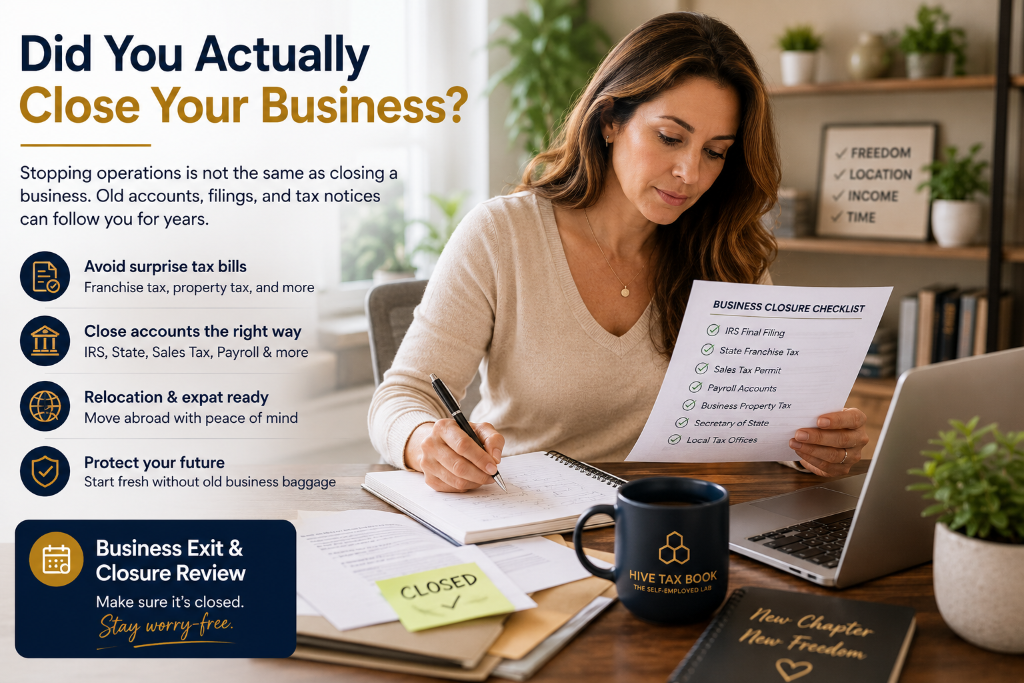
You Moved Abroad. Did You Actually Leave Your Tax Problems Behind?
Many business owners move overseas but forget to properly close tax accounts, LLCs, payroll accounts, and state registrations. Here is what you need to know before you go.
Bookkeeping
Why Self-Employed Owners Struggle With Cash Flow
Cash flow challenges are nearly universal in self-employment — but they are not inevitable. Understanding the structural causes reveals practical solutions.
How Much Reserve Should a Small Business Have?
Reserve planning is not optional for sustainable self-employment. This guide covers how to calculate, build, and maintain appropriate business cash reserves.
Business Cash Flow Problems Self-Employed Owners Ignore
Cash flow problems do not announce themselves — they develop quietly until they become crises. Here are the specific patterns self-employed owners consistently overlook.
Revenue vs Profit Explained for Entrepreneurs
Revenue and profit are not interchangeable — and confusing them is one of the costliest mistakes in self-employment. Here is a clear explanation of the difference and why it matters.
Why Businesses Make Money But Stay Broke
Revenue does not equal financial stability. Many small businesses generate strong sales while operating in persistent cash flow stress. Here is why — and what to do about it.
Hidden Costs of Running a Small Business
Beyond rent, payroll, and software, small businesses carry layers of hidden costs that quietly erode profitability. Understanding them is the first step to controlling them.
Monthly Operating Costs for Entrepreneurs
Understanding and tracking monthly operating costs is foundational to sustainable entrepreneurship. Here is what self-employed professionals consistently overlook in their monthly cost structure.
Small Business Startup Budget Guide
A practical startup budget framework for small businesses — covering one-time costs, recurring expenses, and the tax reserves most new owners forget to include.
Lean Startup Operating Costs for Self-Employed Professionals
How to structure a lean, financially sustainable self-employed business from day one — without overspending on overhead before revenue is established.
Startup Costs for Self-Employed Businesses in 2026
A practical breakdown of what it actually costs to launch and sustain a self-employed business in 2026 — from entity formation to software, taxes, and insurance.
Get Complete Financial Intelligence
Hive Tax Book gives members access to complete self-employed financial intelligence — tax strategy, mortgage readiness, business operations, and more.
Explore Membership