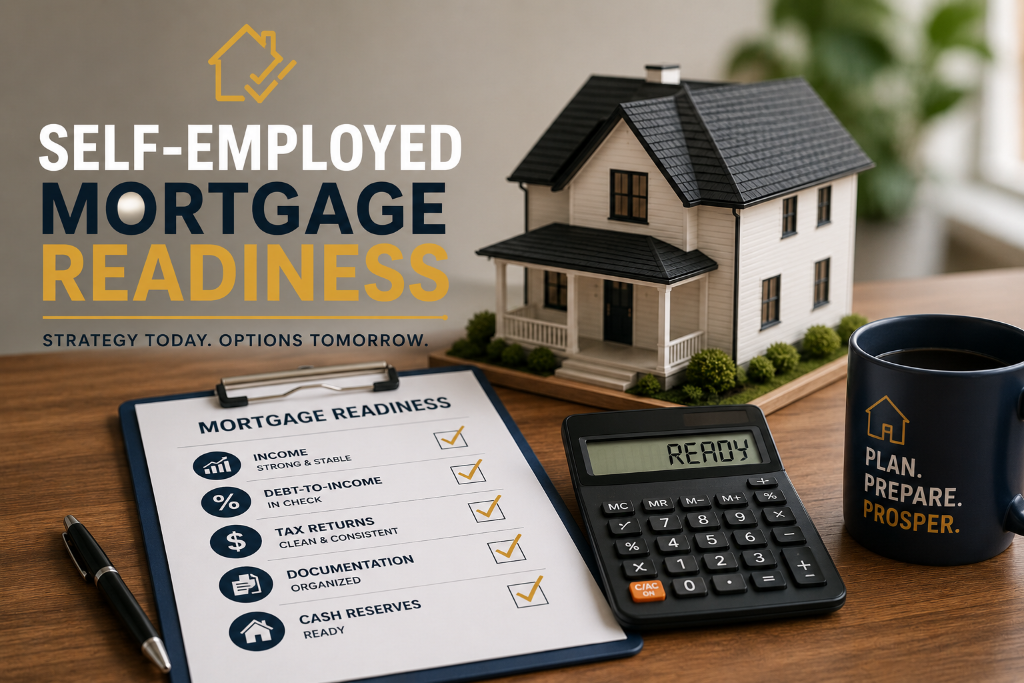
Texas Self-Employed Mortgage Readiness
Many self-employed Texans discover they cannot qualify for a mortgage despite making strong income. The issue is often not revenue — it is how income is reported.
Mortgage underwriting for self-employed borrowers operates differently than most people expect.
Lenders do not qualify borrowers based on gross deposits or business revenue. They qualify borrowers based largely on taxable income after deductions.
This creates a major problem for many entrepreneurs.
Aggressive tax write-offs may reduce IRS liability but can also reduce qualifying income significantly.
Self-employed borrowers often hear:
"You make too much money to struggle financially — but not enough on paper to qualify."
Mortgage Readiness Requires Balancing
-
Tax efficiency
-
Net profit
-
Debt-to-income ratios
-
Documentation quality
-
Income consistency
Texas self-employed borrowers should begin planning well before applying for financing.
Strong Mortgage Readiness Includes
-
Clean bookkeeping
-
Stable deposits
-
Consistent tax filings
-
Controlled deductions
-
Business account separation
-
Strategic entity planning
Underwriters Evaluate
-
Net business income
-
Business stability
-
Cash flow trends
-
Debt obligations
-
Tax return consistency
Large deductions shortly before applying can create unintended qualification problems.
This is why mortgage strategy and tax strategy should work together — not against each other.
Why This Matters
Your tax return can either support your financial goals or quietly block them.
The earlier planning begins, the more options become available.
Next Steps
Use the mortgage readiness tools, DTI calculators, income analysis systems, and tax planning resources inside Hive Tax Book to better prepare for future financing opportunities.