Insights from Hive Tax Book
Self-Employed Financial Intelligence
Practical tax knowledge, mortgage readiness, business operations, and financial planning for self-employed professionals.
Popular Insights
Understanding the Difference: Tax Preparation vs. Tax Planning vs. Tax Resolution
Learn the key differences between tax preparation, tax planning, and tax resolution — and why each service serves a distinct purpose.
At What Income Level Does It Make Financial Sense for a Freelancer to Switch to an S-Corp?
Many freelancers wonder when an S-Corp actually starts saving money. The answer isn't based on revenue alone. Learn the income ranges, tax implications, payroll requirements, and strategic considerations that determine whether an S-Corp election makes financial sense.

Why Every LLC Needs a Registered Agent (Especially If You Travel or Work Remotely)
A registered agent serves as your business's official point of contact for state correspondence. For entrepreneurs who travel, work remotely, or relocate overseas, a registered agent can be crucial for maintaining compliance.
Featured Insights
At What Income Level Does It Make Financial Sense for a Freelancer to Switch to an S-Corp?
Many freelancers wonder when an S-Corp actually starts saving money. The answer isn't based on revenue alone. Learn the income ranges, tax implications, payroll requirements, and strategic considerations that determine whether an S-Corp election makes financial sense.
Why Every LLC Needs a Registered Agent (Especially If You Travel or Work Remotely)
A registered agent serves as your business's official point of contact for state correspondence. For entrepreneurs who travel, work remotely, or relocate overseas, a registered agent can be crucial for maintaining compliance.
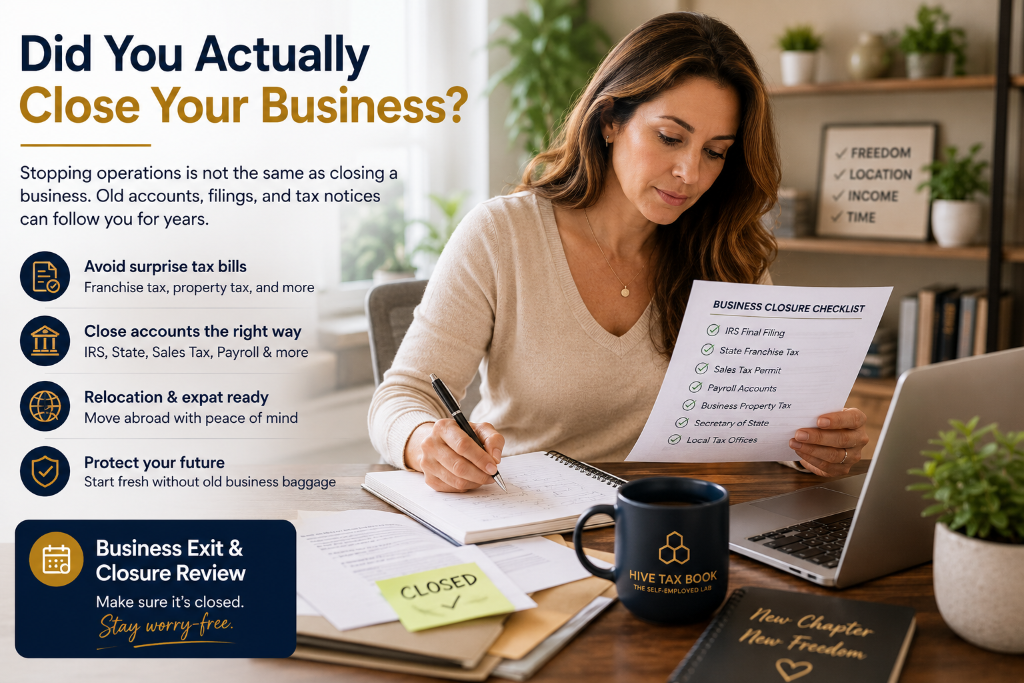
You Moved Abroad. Did You Actually Leave Your Tax Problems Behind?
Many business owners move overseas but forget to properly close tax accounts, LLCs, payroll accounts, and state registrations. Here is what you need to know before you go.
All Insights

Do I Have to Pay Texas Unemployment Insurance Tax? Does My Company Need to Register?
Texas has no state income tax, but employers may still be required to register with the Texas Workforce Commission and pay unemployment insurance tax. Learn when registration is required and what it means for your LLC, S-Corp, or small business.
At What Income Level Does It Make Financial Sense for a Freelancer to Switch to an S-Corp?
Many freelancers wonder when an S-Corp actually starts saving money. The answer isn't based on revenue alone. Learn the income ranges, tax implications, payroll requirements, and strategic considerations that determine whether an S-Corp election makes financial sense.
Late Form 5472 for a Foreign-Owned Single-Member LLC: What Should I Do?
Missed filing Form 5472 and the pro forma Form 1120 for your foreign-owned LLC? Here's what you need to know about penalties, reporting obligations, and what to do next.

Do I Still Have to File U.S. Taxes If I Live Abroad?
If you're a U.S. citizen or green card holder, you are generally required to file a U.S. tax return regardless of where you live in the world. Moving overseas does not automatically end your U.S. tax filing obligations.
Sales Tax Doesn't Care About Your Nationality: What Foreign Business Owners Need to Know
If you own a U.S. business but live outside the United States, assuming sales tax doesn't apply to you is one of the most expensive mistakes you can make.
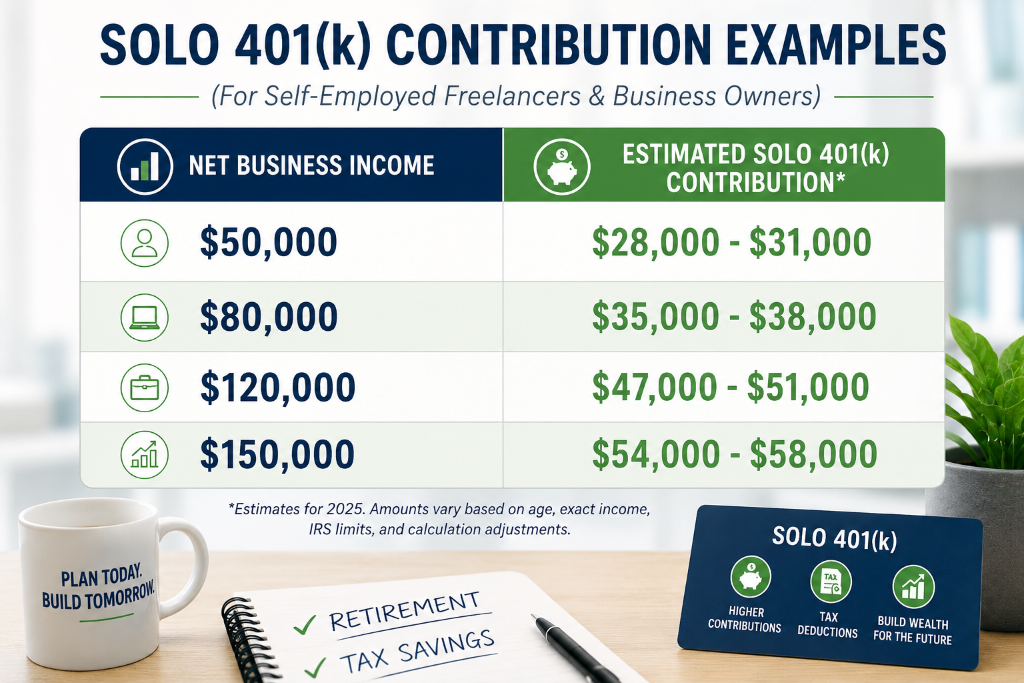
How Much Can I Contribute to a Solo 401(k) as a Freelancer?
If your freelance business earns $80,000 of net income, you may be able to contribute approximately $35,000 to $38,000 into a Solo 401(k). Most freelancers are surprised when they hear that.
Can a Section 179 Deduction Be Carried Forward?
If your Section 179 deduction is limited because your business doesn't have enough taxable income, the unused portion can generally be carried forward to future tax years — but whether you should use it is a different question entirely.
Why Every LLC Needs a Registered Agent (Especially If You Travel or Work Remotely)
A registered agent serves as your business's official point of contact for state correspondence. For entrepreneurs who travel, work remotely, or relocate overseas, a registered agent can be crucial for maintaining compliance.
You Moved Abroad. Did You Actually Leave Your Tax Problems Behind?
Many business owners move overseas but forget to properly close tax accounts, LLCs, payroll accounts, and state registrations. Here is what you need to know before you go.
How Do I Qualify for the Home Office Deduction?
Many business owners assume that simply working from home qualifies them for a home office deduction. Unfortunately, the IRS has very specific rules — and understanding them can create legitimate tax savings while reducing audit risk.
How Many Years of Tax Returns Are Required to Buy a House?
If you're self-employed, chances are you've heard this before: 'You need two years of tax returns before you can buy a house.' Sometimes that's true. Sometimes it isn't.
Can I Buy a House Using Bank Statements Instead of Tax Returns?
Many business owners write off legitimate expenses and later discover their tax returns don't reflect their true cash flow. Bank statement loans were designed specifically for this situation.
What If My Business Shows a Loss?
My business shows a loss. Does that mean I can't buy a house? Not necessarily. But it does mean we need to look deeper.
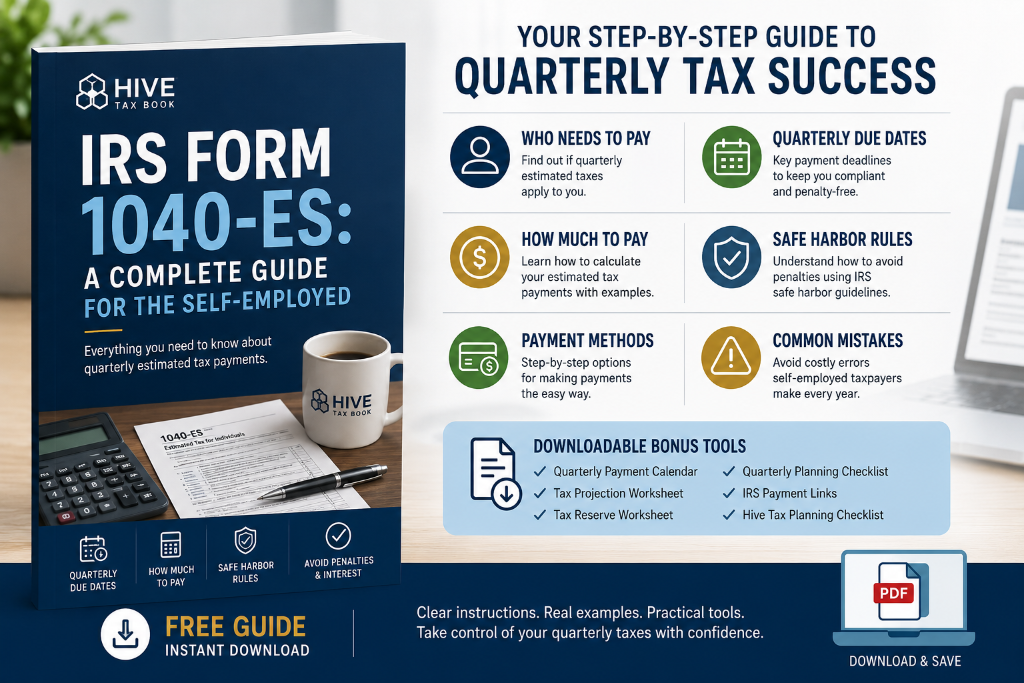
IRS Form 1040-ES: A Complete Guide for the Self-Employed
If you're self-employed, nobody is withholding taxes from your income. This complete guide explains who needs to make quarterly estimated tax payments, how much to pay, key due dates, safe harbor rules, and common mistakes to avoid.

How to Determine a Reasonable Salary for Your S-Corporation
Electing S-Corp status creates real tax savings — but only if you get the reasonable salary right. Here's what the IRS looks for and how to document it.
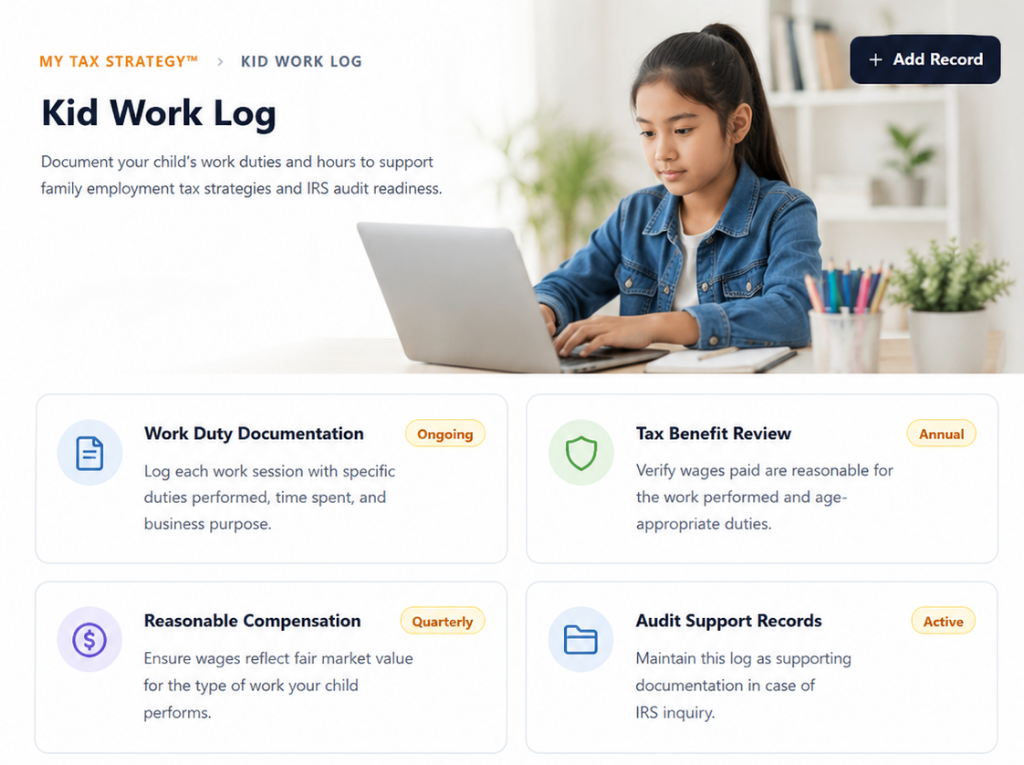
Hiring Your Kids This Summer: A Smart Way to Teach Skills While Creating Legitimate Tax Savings
If you're a business owner, hiring your children can create legitimate tax planning opportunities when structured properly — while teaching real-world skills.

Self-Employed Hiring Strategy Guide
Growing beyond solo operations requires a deliberate hiring strategy. This guide covers when to hire, who to hire first, and how to structure early-stage workforce additions.

Coming Soon: What Is Hive Agent Intelligence?
Why Mortgage Readiness Visibility Is Becoming One of the Most Important Tools for Realtors
Should You Hire Contractors or Employees?
The contractor vs employee decision affects cash flow, taxes, compliance, and operational flexibility. Here is a practical framework for making the right choice for your business.

When the Cost of Living Changes the American Dream: Why More Families Are Exploring Global Relocation
Economic pressure, burnout, and rising housing costs are driving more Americans—especially self-employed individuals—to explore global relocation. Learn why this conversation is becoming mainstream and how to approach it strategically.

Why Self-Employed Texans Are Failing Underwriting — and How to Fix Your 2026 Tax Returns
For many self-employed Texans, the mortgage denial doesn't happen because of bad credit. It happens because of tax returns. Learn how to align your tax strategy with your mortgage goals before it's too late.

Property Taxes in Houston, Austin, and Dallas: What Texas Homebuyers Need to Know
Texas continues attracting homeowners and self-employed professionals, but buyers are often surprised by how dramatically property tax structures vary between major metro areas.
Payroll Costs Small Businesses Forget
Small businesses consistently underestimate payroll costs — not the wages themselves, but the layers of additional employer obligations that surround every hire.

How the Texas Homestead Exemption Helps Offset Texas' High Property Taxes
Texas homeowners are no strangers to high property taxes. The Texas Homestead Exemption remains one of the most important protections available to primary residence homeowners.
What is Considered Income?
For self-employed business owners, income is much broader than a paycheck. Learn how 1099 income, tips, cash payments, capital gains, and other revenue sources are classified — and how different income types are taxed.
Why Your Business Makes Money — But You Don't Have Anything Left
If your business is generating income but nothing seems to be left at the end of the month, the issue usually isn't how much you're making — it's visibility into where it's going.
Real Cost of Hiring Employees for Small Businesses
The real cost of a new employee extends well beyond the salary offer. Understanding the full cost helps small businesses make better hiring decisions and avoid budget shortfalls.
Healthcare.gov in Transition: What's Changing, What It Means, and What to Consider Next
Healthcare.gov is evolving. For self-employed individuals and families, understanding carrier shifts, rising costs, and policy uncertainty is essential to making informed coverage decisions.
Marketing ROI for Self-Employed Businesses
Marketing return on investment is often discussed but rarely measured in self-employed businesses. Here is a practical framework for tracking what your marketing spend actually produces.
Tax Returns vs. Bank Statement Loans: What Self-Employed Borrowers Should Know
Self-employed borrowers often face a frustrating paradox: their business is thriving, but their tax returns don't reflect it. Here's what you need to know about your two main qualification paths.
1099 vs W-2 Cost Breakdown for Business Owners
The financial difference between engaging a 1099 contractor versus hiring a W-2 employee extends far beyond the pay rate. Here is a complete cost comparison for small business owners.
How to Read an IRS CP2000 Notice
Understanding what a CP2000 notice actually means, why taxpayers receive them, and how to respond properly before penalties grow.
What Can You Write Off as a Self-Employed Business Owner? A Practical Guide
Discover the most common self-employed tax deductions, what qualifies as a write-off, and how to properly track expenses to reduce your taxable income.
Small Business Growth Budgeting
Budgeting for growth requires a different financial framework than budgeting for operations. Here is how small business owners can invest in growth without compromising current stability.
Smart Budgeting for Self-Employed Owners
Self-employed budgeting requires a different approach than household or corporate budgeting. This guide outlines the methods that work for irregular income, variable expenses, and quarterly tax obligations.
Advertising Costs for Consultants
Understanding what advertising costs — and what it should produce — helps consultants make better investment decisions and avoid common paid advertising mistakes.
S Corporation Advantages vs. Disadvantages: What Business Owners Need to Fully Understand
Electing S Corp status is often presented as a tax-saving move — but the full picture includes payroll requirements, compliance costs, and long-term implications that are rarely discussed.
How to Reduce Business Overhead
Reducing overhead does not mean cutting corners. It means ensuring every ongoing cost is producing commensurate business value — and eliminating those that are not.
Marketing Spend vs Profitability for Self-Employed Professionals
Marketing spend affects profitability in both directions — too little limits growth, too much without return erodes margins. Here is how to find the right balance.
Strategic Retirement Planning for the Self-Employed
Retirement planning for the self-employed is not about opening an account—it's about aligning income, tax strategy, and long-term financial goals into one coordinated plan.
Qualifying for a Mortgage as a Self-Employed Borrower: What Most People Get Wrong
Many self-employed individuals earn strong income but struggle to qualify for a mortgage. The issue is not income—it is how that income is structured, reported, and interpreted by lenders.
Why High-Income Earners Purchase Large Assets: A Strategic Perspective
Large asset purchases among high-income earners are rarely impulsive. They are part of a broader strategy to structure income, optimize tax positioning, and support long-term financial planning.
Understanding Rollovers: The Right Way, The Wrong Way, and What It Means for Your Taxes
Retirement rollovers can appear simple, but small mistakes can lead to significant tax consequences. Understanding the difference between proper execution and costly errors is essential for self-employed professionals and high-income earners.
Understanding the Difference: Tax Preparation vs. Tax Planning vs. Tax Resolution
Learn the key differences between tax preparation, tax planning, and tax resolution — and why each service serves a distinct purpose.
Operating Expenses Every Business Owner Forgets
These are the recurring operating costs that consistently go unbudgeted — until they arrive and disrupt cash flow. A practical guide to the expenses most business owners forget to plan for.
Best Marketing Budget for Service Businesses
Service businesses require a different marketing investment approach than product companies. Here is how to set a realistic marketing budget that produces results without compromising profitability.
Small Business Expense Planning Guide
Expense planning for small businesses goes beyond tracking what has already been spent. Proactive expense planning creates the financial clarity needed to make better business decisions.
Business Budget Planning for Entrepreneurs
Effective budget planning for entrepreneurs requires more than tracking expenses — it requires building a financial model that reflects how a self-employed business actually operates.
The Importance of Trust Planning: What Business Owners and Families Often Overlook
Trust planning is one of the most overlooked areas of financial strategy — not because it lacks value, but because it is often misunderstood. Here's what business owners and families should consider.
Why Self-Employed Owners Struggle With Cash Flow
Cash flow challenges are nearly universal in self-employment — but they are not inevitable. Understanding the structural causes reveals practical solutions.
How Much Reserve Should a Small Business Have?
Reserve planning is not optional for sustainable self-employment. This guide covers how to calculate, build, and maintain appropriate business cash reserves.
Revocable vs. Irrevocable Trusts: A Simple Breakdown
One of the first questions in trust planning is: should I set up a revocable or an irrevocable trust? The answer depends on what you're trying to accomplish.
Business Cash Flow Problems Self-Employed Owners Ignore
Cash flow problems do not announce themselves — they develop quietly until they become crises. Here are the specific patterns self-employed owners consistently overlook.
Revenue vs Profit Explained for Entrepreneurs
Revenue and profit are not interchangeable — and confusing them is one of the costliest mistakes in self-employment. Here is a clear explanation of the difference and why it matters.
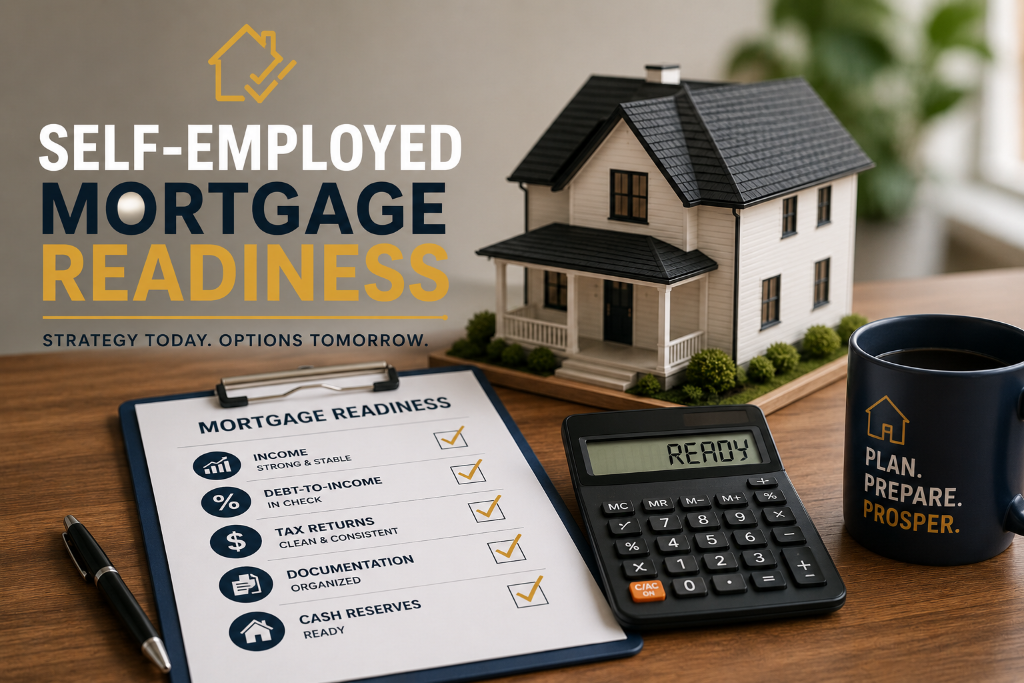
Texas Self-Employed Mortgage Readiness
Many self-employed Texans discover they cannot qualify for a mortgage despite making strong income. The issue is often not revenue — it is how income is reported.
Why Businesses Make Money But Stay Broke
Revenue does not equal financial stability. Many small businesses generate strong sales while operating in persistent cash flow stress. Here is why — and what to do about it.
Hidden Costs of Running a Small Business
Beyond rent, payroll, and software, small businesses carry layers of hidden costs that quietly erode profitability. Understanding them is the first step to controlling them.
Monthly Operating Costs for Entrepreneurs
Understanding and tracking monthly operating costs is foundational to sustainable entrepreneurship. Here is what self-employed professionals consistently overlook in their monthly cost structure.
Small Business Startup Budget Guide
A practical startup budget framework for small businesses — covering one-time costs, recurring expenses, and the tax reserves most new owners forget to include.
Lean Startup Operating Costs for Self-Employed Professionals
How to structure a lean, financially sustainable self-employed business from day one — without overspending on overhead before revenue is established.
Startup Costs for Self-Employed Businesses in 2026
A practical breakdown of what it actually costs to launch and sustain a self-employed business in 2026 — from entity formation to software, taxes, and insurance.
Get Complete Financial Intelligence
Hive Tax Book gives members access to complete self-employed financial intelligence — tax strategy, mortgage readiness, business operations, and more.
Explore Membership